By browsing on our website, you are agreeing to our cookies policy.


Air Connectivity Ranking: Asia-Pacific Reports 13 Percent Growth; Middle East Leads with 28 Percent

Airports Council International Asia-Pacific & Middle East (ACI APAC & MID) recently announced its highly anticipated Air Connectivity Ranking 2024, revealing a remarkable 14 percent year-on-year increase in both Asia-Pacific and Middle East regions, driven by strong international demand, robust network recovery, and the return of major travel corridors.


The ACI Asia-Pacific & Middle East Air Connectivity Ranking is a comprehensive, passenger-centric analytical tool developed in collaboration with PwC in 2023 and refined for its third edition in this year. The Ranking evaluates the overall level of air passenger connectivity offered by airports across the Asia-Pacific and Middle East regions. It assesses performance through three fundamental building blocks: network scale and frequency, economic weight of destinations, and connection quality and efficiency.


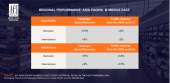
The Asia-Pacific region witnessed a remarkable 13 percent jump in overall connectivity compared to 2023, while the Middle East posted an impressive 28 percent increase, surpassing all post-COVID recovery forecasts. On average, connectivity across all airports rose in both Asia-Pacific and the Middle East by +14 percent, a strong testament to the resilience and dynamism of the aviation sector.


In Asia-Pacific, intra-regional connections are nearly back to pre-pandemic levels, trailing by just 0.2 percent. At the same time, intercontinental connectivity is on the rise, showing a solid 4 percent increase.


The Middle East, however, is not just recovering – it is setting a new pace. Both intra-regional and inter-continent connectivity have not only bounced back but have exceeded pre-pandemic levels by a significant margin of 18 percent and 16 percent, respectively.
Key findings 

  • Airports in the region saw an average connectivity increase of +14 percent compared to 2023, indicating a strong industry recovery. 
  • Airports in Asia-Pacific and the Middle East experienced across-the-board connectivity growth in 2024, driven by China's reopening and route expansions. 
  • 80 percentof the top 300 airports have fully recovered connectivity levels, with larger hubs leading due to the resurgence of international travel. 
  • Domestic city pairs decreased by an average of-1 percent compared to 2023, suggesting a post-COVID emphasis on international expansion. 
  • International city pairs across all airport categories rose by an average of17 percent, highlighting the strong return to cross-border travel. 
  • While intra-APAC passenger travel in 2024 is nearing 2019 levels, travel to Europe, the Middle East, and Africa has surpassed them, driven by Gulf hubs. Passenger traffic from Asia-Pacific to the Americas still trails 2019 levels. 
  • Passenger traffic in the Middle East recovered faster than APAC, showing robust 2024 vs. 2019 traffic, with passenger traffic to Africa and APAC significantly exceeding pre-pandemic levels. Traffic to the Americas remains below 2019. 
  • Despite increased competition, Dubai maintained its position as the leading airport in APAC and the Middle East. 
  • Major Asian hubs like Incheon, Singapore Changi, Shanghai Pudong, and Beijing Capital saw improved rankings and indices, reflecting strong outbound tourism and network adjustments.


Hub Airports with Connectivity Leadership

The 2025 edition features a newly introduced 'Hub Connectivity Index,' which evaluates each airport based on the quality and effectiveness of its hub operations. Dubai International Airport emerged as the top hub, followed by Shanghai Pudong International Airport and Hamad International Airport.